
5 Preventive Measures To Stop Gambling
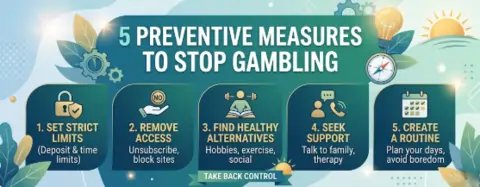
Gambling may start as simple entertainment, but for some people, it can gradually become difficult to control.
What begins as occasional fun may eventually affect finances, relationships, work, and mental well-being.
The good news is that gambling problems can be prevented and managed through awareness, discipline, and healthy lifestyle changes.
In this guide, we’ll explore 5 preventive measures to stop gambling, including practical strategies, emotional support techniques, and healthy alternatives that can help individuals regain balance and control over their lives.
Table of Contents
Why Gambling Prevention Matters from 5 Preventive Measures To Stop Gambling
Before discussing preventive measures, it’s important to understand why prevention is necessary.
Excessive gambling can lead to:
- Financial problems
- Emotional stress
- Anxiety and depression
- Relationship conflicts
- Poor work or academic performance
For some people, gambling becomes a coping mechanism for stress, loneliness, or financial pressure. Preventive measures help reduce these risks before they become serious problems.
1. Identify Gambling Triggers and Avoid Temptation
One of the most important steps in preventing gambling problems is identifying the situations, emotions, or habits that trigger the urge to gamble.
What Are Gambling Triggers?
Triggers are things that increase the desire to gamble. These may include:
- Stress
- Boredom
- Loneliness
- Financial problems
- Peer pressure
- Exposure to gambling advertisements
For some individuals, simply seeing casino content online can encourage impulsive behavior.
Reduce Exposure to Gambling
Limiting exposure can significantly reduce temptation.
Helpful strategies include:
- Uninstall gambling apps
- Unfollow gambling-related social media pages
- Block gambling websites
- Avoid casinos and betting environments
- Disable gambling notifications and promotions
Avoid Risky Social Environments
Sometimes gambling becomes part of a social circle or routine.
If friends constantly encourage betting or casino gaming, it may become harder to stop. Surrounding yourself with supportive people can make prevention easier.
Why 5 Preventive Measures To Stop Gambling Works
When triggers are reduced, urges become easier to manage. Prevention is often more effective when temptation is minimized before impulses grow stronger.
2. Create a Strong Financial Management System
Poor money management is one of the biggest reasons gambling becomes dangerous. Preventing gambling often requires stronger control over finances.
Build a Realistic Budget
A structured budget helps individuals understand:
- Monthly income
- Necessary expenses
- Savings goals
- Emergency funds
When finances are organized, there is less temptation to use extra money impulsively.
Budget Priorities Should Include:
- Bills and utilities
- Food and essentials
- Savings
- Emergency funds
- Family responsibilities
Separate Gambling Access From Main Funds
Some people prevent gambling by limiting direct access to money.
Examples on Main Funds Separation
- Using separate accounts for savings
- Limiting e-wallet balances
- Avoiding stored payment methods on gaming apps
Popular payment apps like:
- GCash
- Maya
make transactions very easy, which is convenient but may also increase impulsive spending if not controlled properly.
Never Chase Financial Losses
One dangerous behavior is trying to recover gambling losses quickly.
This often leads to:
- Bigger losses
- Debt accumulation
- Emotional decision-making
Accepting losses and focusing on financial recovery is a healthier long-term approach.
Why Financial Control Helps
Good financial management creates stability and reduces impulsive behavior. When spending is monitored carefully, gambling opportunities become more limited.
3. Replace Gambling With Healthier Activities and Hobbies
Many people gamble because they are looking for:
- Entertainment
- Excitement
- Escape from stress
- Social interaction
Replacing gambling with healthier activities can reduce the emotional need for betting.
Alternative Entertainment Options
There are many enjoyable activities that provide excitement without financial risk.
Popular alternatives include:
- Video games
- Sports and fitness
- Watching movies
- Traveling
- Cooking
- Music and art
- Reading books
- Photography
These hobbies create positive experiences while improving mental and emotional well-being.
Physical Activities Help Reduce Stress
Exercise is especially effective because it:
- Improves mood
- Reduces anxiety
- Releases stress naturally
- Improves self-control
Simple activities like walking, jogging, or gym workouts can greatly improve emotional balance.
Spend More Time With Family and Friends
Supportive relationships play a huge role in prevention.
Quality time with loved ones helps reduce:
- Loneliness
- Stress
- Emotional isolation
Positive social environments make it easier to avoid unhealthy habits.
Mental Engagement Reduces Gambling Thoughts
Learning new skills or hobbies keeps the brain focused on productive goals instead of gambling urges.
Examples:
- Learning a language
- Starting a small business
- Online courses
- Creative projects
Why Replacing Gambling Works
Stopping gambling becomes easier when people discover healthier sources of enjoyment and fulfillment.
4. Improve Emotional and Mental Health Awareness
Many gambling habits are closely connected to emotional struggles. Preventing gambling often requires improving emotional awareness and coping skills.
Common Emotional Causes of Gambling
People may gamble to escape:
- Stress
- Anxiety
- Depression
- Loneliness
- Financial worries
- Relationship problems
Unfortunately, gambling rarely solves these issues permanently.
Learn Healthier Coping Mechanisms
Healthy coping strategies include:
- Meditation
- Deep breathing exercises
- Journaling
- Talking with trusted friends
- Therapy or counseling
- Prayer or spiritual activities
These methods help individuals manage emotions without relying on gambling.
Reduce Emotional Decision-Making
Strong emotions can lead to impulsive behavior.
People are more likely to gamble excessively when feeling:
- Angry
- Sad
- Lonely
- Frustrated
- Overconfident after wins
Learning emotional awareness helps prevent impulsive decisions.
Seek Professional Support from 5 Preventive Measures To Stop Gambling
For individuals struggling to stop gambling alone, professional support can be extremely valuable.
Support options may include:
- Counselors
- Therapists
- Support groups
- Mental health professionals
Seeking help is a sign of strength, not weakness.
Why Emotional Awareness Matters on 5 Preventive Measures To Stop Gambling
Understanding emotions reduces the need to escape through gambling. Prevention becomes more effective when emotional health improves.
5. Set Clear Personal Goals and Long-Term Priorities
People who have strong goals and clear direction are often better at resisting harmful habits.
Why Goals Help Prevent Gambling
When individuals focus on meaningful goals, they become more careful about:
- Time
- Money
- Energy
- Lifestyle decisions
This creates motivation to avoid unnecessary risks.
Financial Goals Create Motivation
Examples include:
- Saving for a house
- Building an emergency fund
- Starting a business
- Supporting family needs
- Travel goals
These priorities often become more valuable than temporary gambling excitement.
Career and Education Goals
Improving skills and education can create long-term satisfaction and opportunities.
Productive goals include:
- Career advancement
- Certifications
- Learning new skills
- Side businesses
- Personal development
Focus on Relationships and Stability
Strong relationships provide emotional support and purpose.
Building a stable lifestyle often becomes easier when people prioritize:
- Family
- Health
- Career
- Personal growth
Celebrate Small Achievements
Progress should be recognized and celebrated.
Even small improvements like:
- Saving money
- Avoiding gambling for a week
- Completing personal goals
can build confidence and motivation.
Why Long-Term Focus Works
Clear goals shift attention away from short-term excitement toward meaningful long-term rewards.
Summary on 5 Preventive Measures To Stop Gambling
| Preventive Measure | Main Benefit |
|---|---|
| Identify Triggers | Reduces temptation |
| Financial Management | Protects money and savings |
| Healthy Alternatives | Replaces gambling behavior |
| Emotional Awareness | Improves self-control |
| Personal Goals | Builds long-term motivation |
Signs That Additional Help May Be Needed
Some warning signs may indicate more serious gambling problems:
- Borrowing money to gamble
- Hiding gambling activity
- Gambling despite financial problems
- Feeling unable to stop
- Neglecting responsibilities
If these signs appear, seeking professional support early is highly recommended.
Practical Daily Tips for 5 Preventive Measures To Stop Gambling
✔ Daily Habits That Help
- Stick to a budget
- Limit screen time on gaming apps
- Stay physically active
- Build healthy routines
- Avoid boredom through hobbies
- Spend more time with supportive people
✔ Digital Prevention Tools
Many platforms now offer:
- Self-exclusion tools
- Deposit limits
- Time reminders
- Account restrictions
These tools can help reduce impulsive behavior.
Final Thoughts on the 5 Preventive Measures To Stop Gambling
Preventing gambling problems is not only about avoiding casinos or betting apps—it’s about building a healthier, more balanced lifestyle.
By identifying triggers, improving financial habits, developing emotional awareness, and focusing on meaningful goals, individuals can regain control and avoid the harmful effects of excessive gambling.
Gambling prevention becomes much easier when people discover healthier ways to manage stress, enjoy entertainment, and create long-term happiness.
The most important step is recognizing the need for balance and making positive decisions one day at a time.
Every small improvement matters, and with the right support and mindset, positive change is always possible.
For more information and clarification visit SIMPLEPANALO